Pratek Agarwal
Billionaire entrepreneur Elon Musk’s neuroscience startup Neuralink on Friday unveiled a pig named Gertrude that has had a coin-sized computer chip in its brain for two months, showing off an early step toward the goal of curing human diseases with the same type of implant.
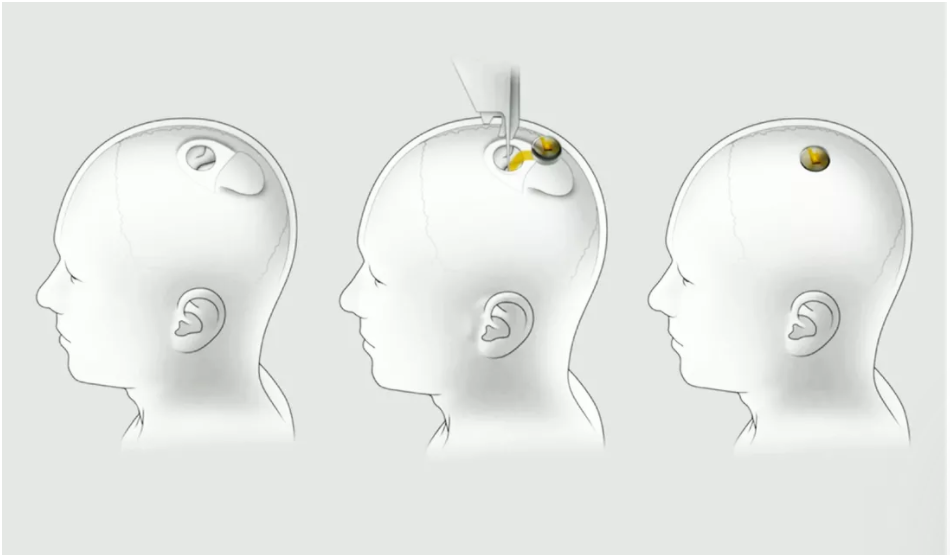
Co-founded by Tesla Inc and SpaceX CEO Musk in 2016, San Francisco Bay Area-based Neuralink aims to implant wireless brain-computer interfaces that include thousands of electrodes in the most complex human organ to help cure neurological conditions like Alzheimer’s, dementia and spinal cord injuries and ultimately fuse humankind with artificial intelligence.
He describes the Neuralink’s chip which is roughly 23 millimetres in diameter, as a “Fitbit in your skull, with tiny wires”.
He made a presentation showing how the link has worked on a pig named Gertrude for the past two months.
With a device surgically implanted into the pig’s skull, Elon Musk demonstrated his startup Neuralink’s technology to build a digital link between brains and computers. A wireless link from the Neuralink computing device showed the pig’s brain activity as it snuffled around a pen on stage Friday night.
Musk also showed a second-generation implant that’s more compact and fits into a small cavity hollowed out of the skull. Tiny electrode “threads” penetrate the outer surface of the brain, detecting an electrical impulse from nerve cells that shows the brain is at work. In line with Neuralink’s longer-term plans, the threads are designed to communicate back, with computer-generated signals of their own.
Such devices — “about the size of a large coin” — will one day be implanted in humans in under an hour using a custom robot that is now under development, he said.
Musk’s end goal is to be able to solve certain human medical conditions like memory loss, seizures, hearing loss, extreme pain, blindness, paralysis, addiction, depression, insomnia, anxiety, strokes, and brain damage.
Neuralink has a medical focus to start, like helping people deal with brain and spinal cord injuries or congenital defects. The technology could, for example, help paraplegics who’ve lost the ability to move or sense because of spinal cord injury, and the first human uses will aim to improve conditions like paraplegia or tetraplegia.
The chip could serve a much bigger purpose. Musk claimed that it could also eventually equip human beings with Artificial Intelligence capabilities.
“The future is going to be weird,” Musk said, discussing sci-fi uses of Neuralink. “In the future you will be able to save and replay memories,” he said. “You could basically store your memories as a backup and restore the memories. You could potentially download them into a new body or into a robot body.”
It features an all-day battery life and would be able to connect directly to a wearer’s Smartphone and Bluetooth.
Computers need power, and Neuralink’s in-skull chip gets it by charging wirelessly through the skin, Musk said.
Musk also stressed on the fact that the device was removable. While it could easily be implanted in the brain by a robot in less than an hour, it could also subsequently be removed without complications, he claimed. He brought forward the second pig, Dorothy, to prove his point further.
There was no mention of when the device will be commercially available, though its price may be not much more than a high-end smartphone.
 Technoholic World